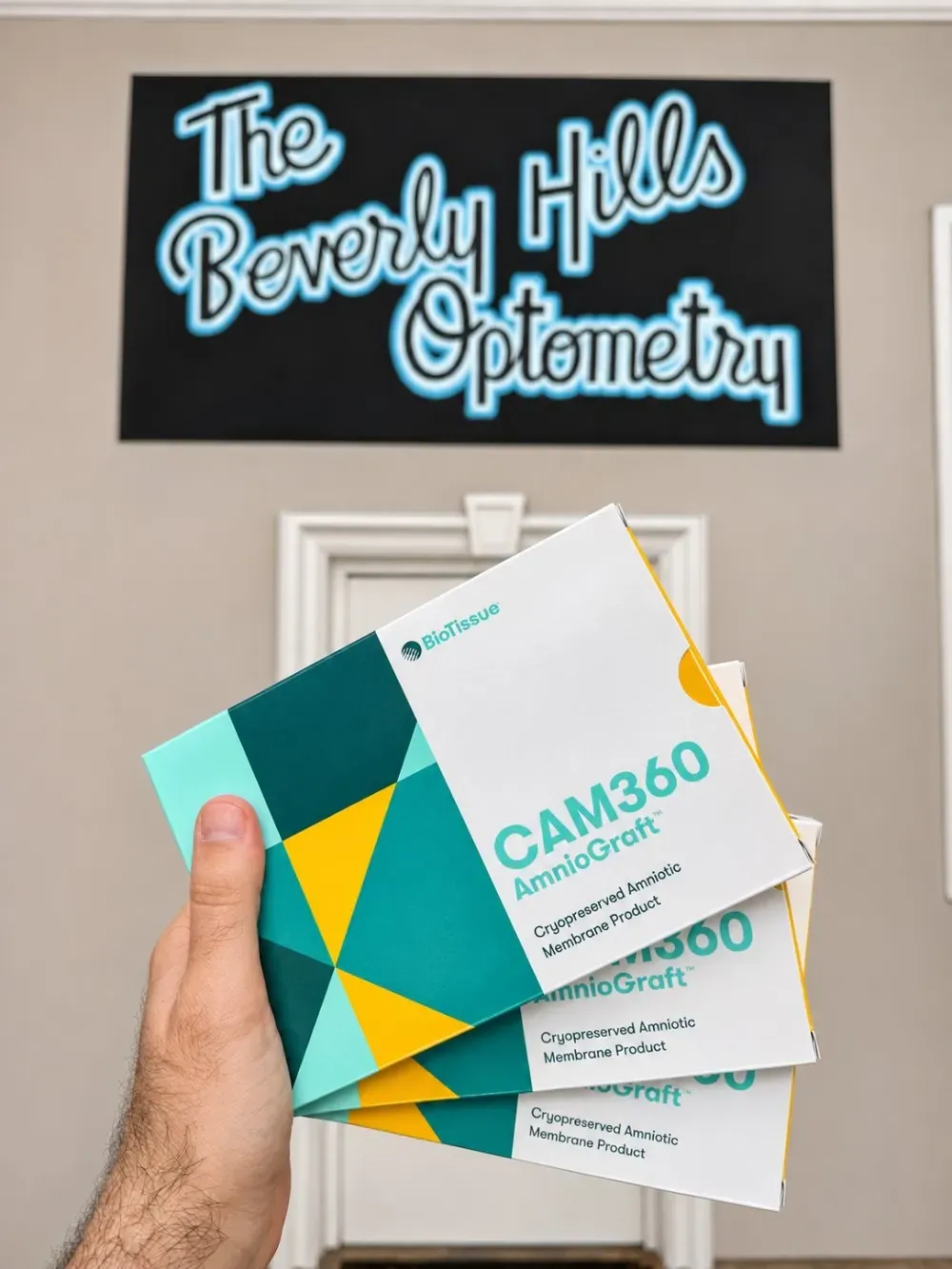
CAM360 Amniotic Membrane Therapy
An innovative treatment option for chronic dry eye disease, corneal inflammation, punctate keratitis, and compromised corneal sensitivity.
At Beverly Hills Optometry Dry Eye Center, we recognize that chronic dry eye disease often involves more than insufficient tear production. In many patients, ongoing inflammation and damage to the corneal surface can contribute to fluctuating vision, irritation, and persistent discomfort.
One advanced treatment we offer is CAM360 AmnioGraft by BioTissue, a cryopreserved amniotic membrane designed to support ocular surface healing.
With over 10 years of experience utilizing amniotic membrane therapy, particularly Prokera by BioTissue, we have expanded our treatment approach to include CAM360 using a lower eyelid fornix placement technique. Introduced in 2026, this approach has produced encouraging and comparable clinical outcomes in our patients, including improvements in vision, comfort, and corneal surface health.
What Is Amniotic Membrane Therapy?
Amniotic membrane is a naturally occurring tissue obtained from the innermost layer of the placenta following a carefully screened donor birth. It has been used in eyecare for decades because of its unique biological properties that support tissue repair and healing.
The membrane contains a natural extracellular matrix and biological components associated with:
-
Anti-inflammatory activity: Helps regulate inflammation on the ocular surface.
-
Epithelial healing: Supports restoration of the corneal epithelium, the delicate outermost layer of the cornea.
-
Anti-scarring properties: Helps support healthy tissue repair.
-
Ocular surface restoration: Provides a supportive environment for compromised ocular tissues.
These properties make amniotic membrane therapy a valuable option for selected patients with chronic dry eye and other ocular surface conditions.
Understanding CAM360 AmnioGraft by BioTissue
CAM360 AmnioGraft is a ringless, cryopreserved amniotic membrane developed by BioTissue. Unlike traditional self-retained amniotic membrane devices that use a plastic ring, CAM360 provides a flexible tissue membrane that can be applied using different techniques.
Depending on the clinical approach, it may be positioned over the ocular surface with an appropriate supporting method, such as a collagen shield or bandage contact lens.
At our practice, we have incorporated an alternative approach using the lower eyelid fornix. This quick technique allows us to utilize the therapeutic properties of the membrane while avoiding vision or comfort concerns.
CAM360 may be considered for patients with:
-
Chronic dry eye disease
-
Superficial punctate keratitis (SPK)
-
Corneal epithelial irregularities
-
Ocular surface inflammation
-
Stage 1 neurotrophic keratitis
-
Persistent conjunctival inflammation and redness
-
Ocular surface damage associated with certain medications
From Prokera to CAM360: Our Experience
At Beverly Hills Optometry Dry Eye Center, we have utilized BioTissue amniotic membrane products for over 10 years, particularly Prokera, a well-established self-retained cryopreserved amniotic membrane device and an important treatment option for significant ocular surface disease.
Our experience with Prokera has given us extensive familiarity with the clinical applications and outcomes of amniotic membrane therapy for patients with corneal inflammation, epithelial damage, and difficult-to-treat ocular surface conditions.
As treatment options have evolved, we have expanded our approach to include CAM360, allowing us to offer an additional method of delivering amniotic membrane therapy to appropriately selected patients.
Our Newer Approach: CAM360 Placement Through the Lower Eyelid Fornix
We are excited to share that now use a lower eyelid fornix approach to CAM360 application.
The lower fornix is the pocket-like space between the lower eyelid and the eyeball. Rather than placing a traditional ring-based device directly over the cornea, this technique utilizes the lower eyelid space to position the amniotic membrane.
One potential advantage of this approach is that patients can avoid the visual obstruction and mechanical discomfort commonly associated with traditional ring-based amniotic membrane devices.
We have been particularly encouraged by the outcomes observed in our patients, including:
-
Improved visual clarity
-
Greater ocular comfort and reduced irritation
-
Improvement in corneal staining and superficial punctate keratitis
These observations reflect our clinical experience since introducing this technique. Individual results vary depending on the underlying condition and severity of ocular surface damage.
How Does CAM360 Help With Punctate Keratitis?
One of the most important applications of amniotic membrane therapy in our practice is the management of superficial punctate keratitis (SPK).
The cornea is covered by a thin, transparent layer of cells called the corneal epithelium. This protective layer is essential for maintaining clear vision and protecting the eye.
In patients with chronic dry eye disease, meibomian gland dysfunction, inadequate tear production, or ongoing inflammation, the corneal epithelium can become damaged.
This results in punctate keratitis, characterized by multiple tiny areas of epithelial disruption or micro-abrasions on the corneal surface.
Common symptoms include:
-
Burning or stinging sensations
-
Fluctuating or blurry vision
-
Light sensitivity
-
Foreign-body sensation
-
Excessive tearing
-
Persistent eye irritation and discomfort
While artificial tears and prescription medications can help manage dry eye symptoms, some patients continue to experience corneal staining and epithelial damage despite conventional treatments.
CAM360 offers an additional biological tissue-based approach that may support epithelial recovery and help create a healthier environment for corneal healing.
Who May Benefit From CAM360 Amniotic Membrane Therapy?
CAM360 may be appropriate for patients experiencing:
1) Chronic Dry Eye Disease: Patients with persistent symptoms and evidence of ocular surface damage despite conventional therapies.
2) Superficial Punctate Keratitis: Patients with corneal staining, micro-abrasions, and epithelial disruption.
3) Persistent Ocular Surface Inflammation: Patients with ongoing inflammation that interferes with normal corneal epithelial health.
4) Reduced Corneal Sensitivity: Patients with compromised corneal sensation and impaired epithelial healing.
5) Difficult-to-Treat Ocular Surface Disease: Patients who have not achieved adequate improvement with artificial tears, prescription drops, anti-inflammatory medications, or conventional in-office dry eye treatments.
A comprehensive evaluation is necessary to determine whether CAM360 is appropriate for each individual patient.
What Can Patients Expect Before, During, and After the Treatment?
Prior to treatment, we perform a comprehensive dry eye evaluation of the ocular surface. We assess the corneal epithelium, tear film, degree of inflammation, and other contributing factors.
If CAM360 is appropriate, the doctor will discuss the recommended placement technique and aftercare instructions.
Patients receive individualized guidance regarding any necessary eye protection, lubricating drops, activity restrictions, and follow-up examinations. Follow-up visits allow us to monitor corneal staining, evaluate epithelial healing, and determine whether additional treatment is necessary.
Advanced Ocular Surface Care at Beverly Hills Optometry Dry Eye Center
Our approach to dry eye disease combines advanced diagnostic testing with individualized treatment protocols. In addition to amniotic membrane therapy, our available treatment options may include:
-
OptiLight IPL
-
OptiPlus radiofrequency
-
OptiLift DMSt
-
Lipiflow Thermal Pulsation
-
BlephEx or ZEST eyelid exfoliation
-
Meibomian gland probing
-
Lacrifill hyaluronic acid gel punctal plugs
- Rinsada high flow irrigation
By addressing the underlying contributors to ocular surface disease, our goal is to improve corneal health, visual quality, and long-term patient comfort.
Restore the Health of Your Ocular Surface
If you are experiencing chronic dry eye, persistent corneal staining, fluctuating vision, or ongoing eye discomfort despite trying multiple treatments, advanced ocular surface therapies may offer additional options.
Contact Beverly Hills Optometry Dry Eye Center to schedule a comprehensive dry eye evaluation and find out whether CAM360 amniotic membrane therapy may be right for you.